The Complete Guide to Wood Cat Trees: Why Your Cat Deserves Better Than PVC
If you’ve ever watched your cat ignore the expensive toy you just bought and instead curl up inside a cardboard box, you already understand something fundamental about feline psychology: cats don’t care about what looks good to you. They care about texture, stability, height, and smell.
Which is exactly why wood cat trees are starting to replace the carpet-and-PVC towers that have dominated the pet market for decades.
What Is a Wood Cat Tree?
A wood cat tree is a multi-level climbing and lounging structure built primarily from solid wood — typically pine, birch, or rubberwood — rather than the particleboard or pvc pipes found in conventional cat furniture. The platforms, perches, and base are crafted from real timber, often finished with pet-safe coatings or left natural.
The result is a piece of furniture that behaves more like furniture and less like a pet store accessory.
Why Wood Beats Carpet and PVC Every Time
1. Durability that actually holds up
Standard carpet-wrapped cat trees have a well-known problem: they age badly. The carpet frizzes, traps dander, absorbs odors, and eventually starts peeling off in chunks. Once the structural foam or particleboard underneath gets exposed to moisture, the whole structure begins to degrade.
Solid wood doesn’t behave this way. A well-constructed wood cat tree, properly sealed, can last five to ten years with basic maintenance. The surface stays cleanable, the joints stay tight, and the overall structure retains its integrity.
2. Stability your cat will actually trust
Cats are cautious creatures. If a perch wobbles the first time they jump on it, many cats will simply stop using it. The heavier base weight of solid wood naturally prevents tipping, and wood-to-wood joinery — when done correctly — produces far stronger connections than screws going into pressboard.
A wobbly cat tree isn’t just unused furniture. For multi-cat households or heavier breeds like Maine Coons and Ragdolls, it’s a safety concern.
3. Natural material, natural instinct
Cats scratch because they need to — it’s a combination of claw maintenance, muscle stretching, and scent marking through paw glands. The texture of real wood engages these instincts in a way synthetic materials simply don’t replicate.
Many cats that ignore carpet-wrapped scratching posts will actively seek out wood surfaces. You’ve probably already seen this if your cat has ever gone after a door frame, a chair leg, or a wooden baseboard.
4. Aesthetics that fit your home
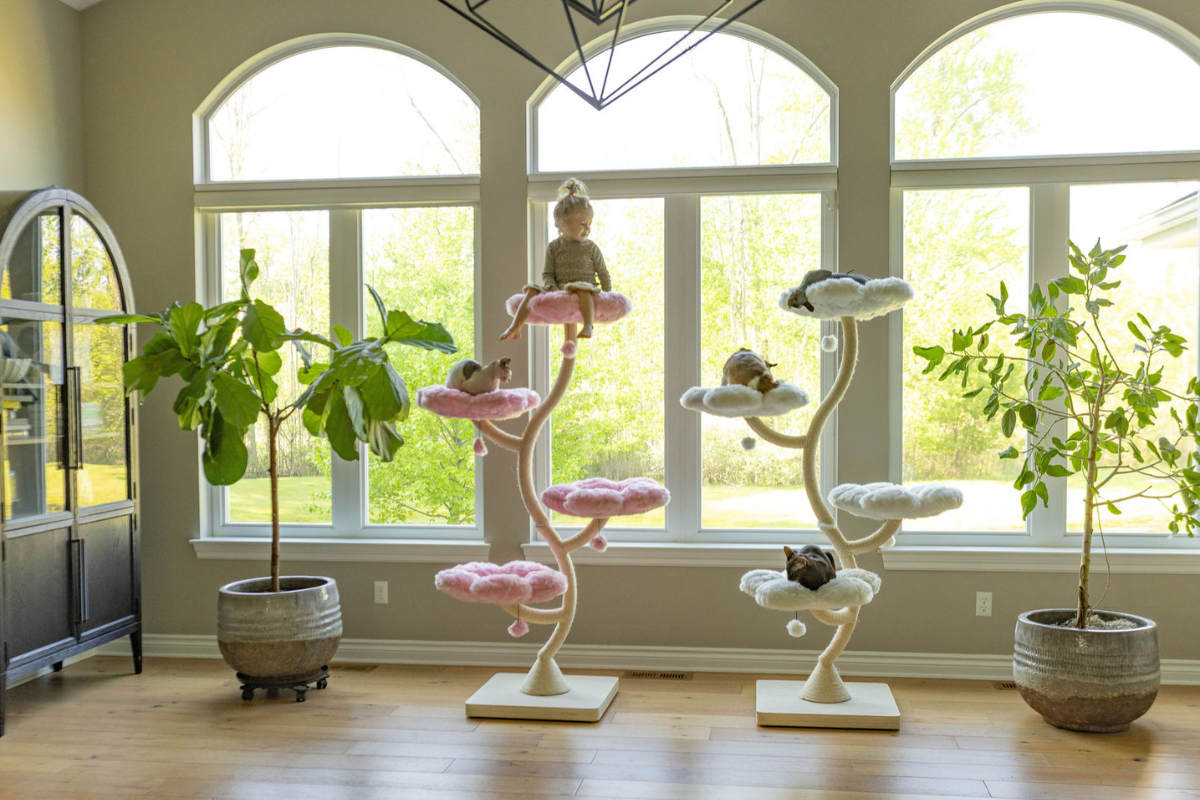
This point matters more than the pet industry likes to admit. People avoid placing cat trees in living rooms and primary spaces because they’re ugly. A beige carpet monolith doesn’t blend into a modern apartment or a Scandinavian-inspired home office. So the tree gets banished to a corner of the spare bedroom, the cat ignores it, and everyone wonders why the couch is getting shredded.
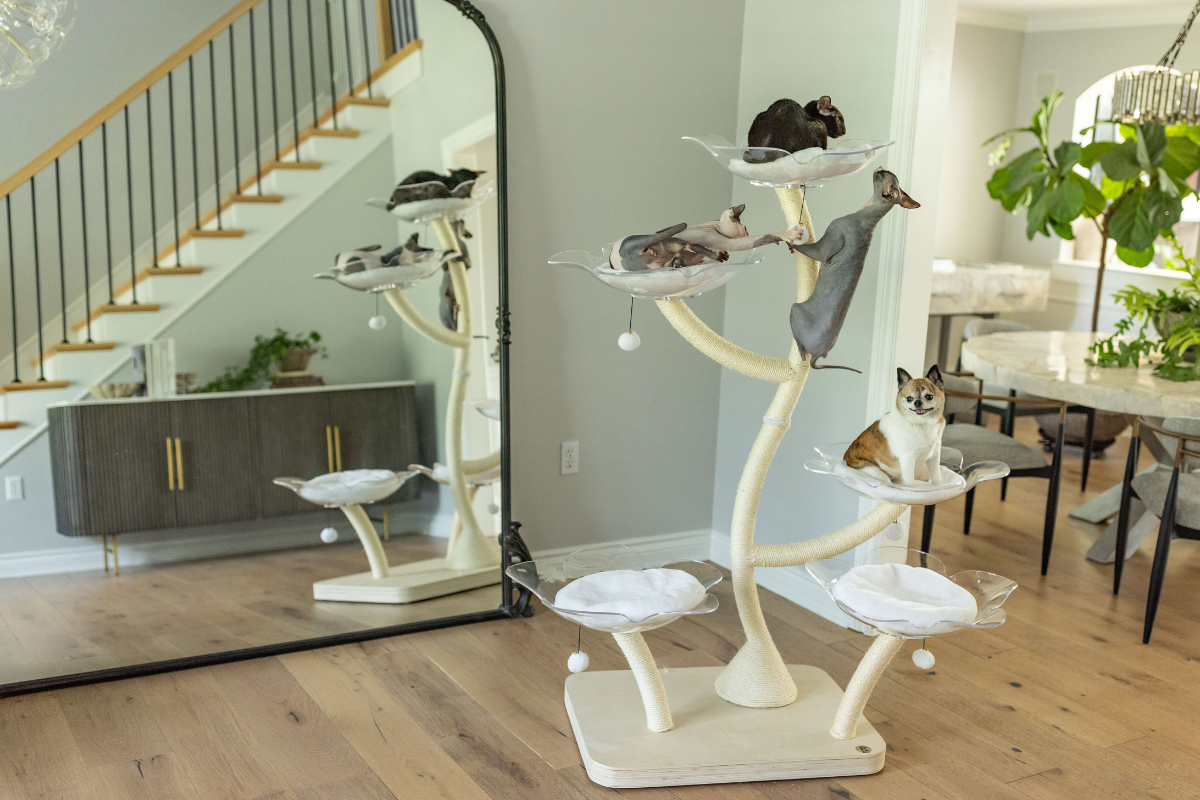
Wood cat trees — especially those with clean lines, exposed grain, and minimal ornamentation — actually complement contemporary interiors. When cats can use their tree in the main living space, usage rates go up dramatically.
What to Look for in a Wood Cat Tree
Not all wood cat trees are equal. Here’s what separates a well-built piece from something that just looks good in a product photo:
• Weight and base construction — The base should feel heavy relative to the overall height. A tall, narrow tree with a light base is inherently unstable.
• Joinery quality — Look for mortise-and-tenon or dowel-based joinery rather than just screws. Screws into end grain wood lose holding power over time.
• Finish type — Pet-safe, water-based finishes are preferable. Avoid anything with heavy solvent smell, which can irritate cats’ respiratory systems.
• Platform sizing — Cats prefer to sleep curled up, but they also like to stretch. A platform at least 35–40 cm wide gives a medium-sized cat genuine usable space.
• Scratch post integration — Sisal rope wrapped around wooden posts offers the best combination of wood and texture. Some designs leave sections of natural bark exposed, which many cats prefer for claw sharpening.
Common Misconceptions About Wood Cat Trees
“They’re too expensive.”
The upfront cost is higher, yes. But when you’re replacing a cheap carpet tree every 18 months because it’s become a sanitary problem, the economics flip quickly. A wood cat tree purchased once — and properly maintained — almost always costs less over a 5-year period.
“My cat won’t use it.”
Transition matters. Cats resist sudden environmental changes. Place the new tree near where your cat already sleeps or scratches. Add familiar scent by rubbing a cloth on your cat’s face and wiping it on the new tree. Use silver vine or valerian rather than catnip if your cat doesn’t respond to catnip — roughly 30% of cats don’t.
“Wood splinters are dangerous.”
Sanded, finished wood surfaces carry no meaningful splinter risk. This concern confuses raw construction lumber with finished furniture-grade wood.
Final Thought
Choosing a wood cat tree isn’t really about aesthetics or even durability in isolation. It’s about buying something that actually gets used — because a cat tree that gets used is a couch that doesn’t get destroyed.
The best cat furniture is the kind that ends up covered in cat hair, not gathering dust in a corner.
Explore wood cat tree options designed for modern homes and real cats at kbspets.com